
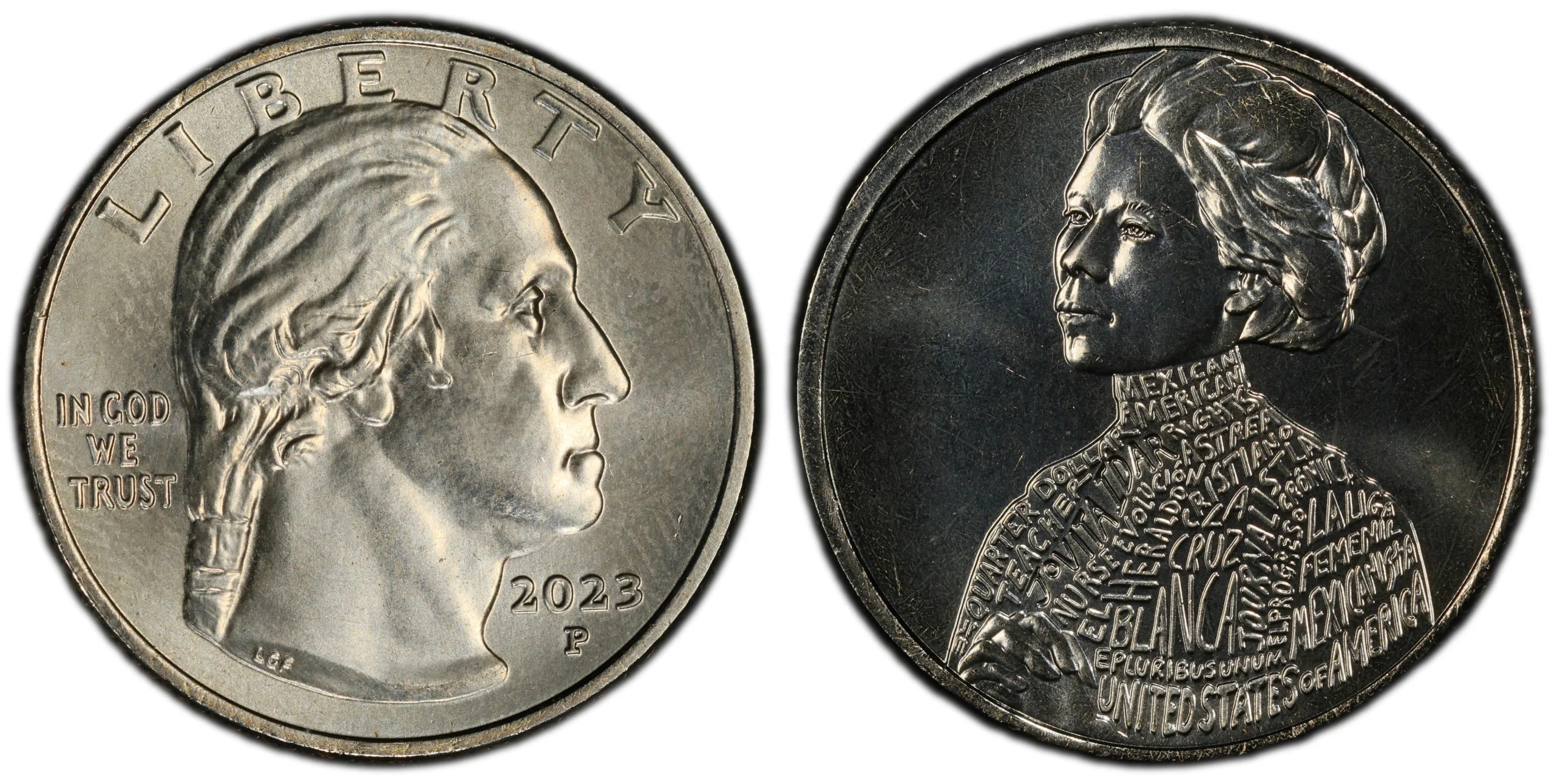
Average quality coins in MS65 condition sell for $3.50 to $7.20 on the market. Rare certified Jovita Idar quarter error tokens showing clear coin mistakes sell for $150 to $850 at public sales.
| Parameter | Value |
| Mass | 5.67 grams |
| Diameter | 24.26 millimeters |
| Thickness | 1.75 millimeters |
| Material | Copper and nickel metal mixture |
| Edge | Reeded |
Main Coin Error Varieties
Each type of coin error has a unique cause and directly changes the final coin market value.
Doubled Die Obverse
This coin error occurs during the hubbing process when the hub copies the image onto the working die with a small shift. You can see doubling on the front of the coin, especially on the letters. Looking closely at the words LIBERTY and IN GOD WE TRUST, you can find clear double lines.
Weak doubling lines sell on the coin market for $15 to $35. Very clear doubled letters increase the coin market value to $110 to $240. The record price for a rare coin with extreme obverse doubling reached $620 at auction.
Die Cracks
Heavy pressure during fast coin production causes the hard steel dies to break and get small cracks. Hot metal flows into these die cracks during the strike, creating raised metal lines on the coin surface. Jovita Idar quarters often have these cracks on the back of the coin, near the letters on her dress.
Small die cracks under three millimeters sell for $5 to $12 on average. Long die cracks crossing the entire coin surface sell for $45 to $95. Large die breaks with a big metal lump sell for $130 to $280.
Off-Center Strikes
This error happens when the round metal blank does not sit correctly inside the collar.
The steel die strikes the shifted metal blank, leaving one part of the coin completely blank and flat. Collectors measure this shift using percentages of the coin surface.
Shift percentage — Price range on the market:
- Shift of 5% to 10% — Value of $25 to $55
- Shift of 15% to 25% — Value of $75 to $160
- Shift of 30% to 50% with a full date — Value of $190 to $420
Coins with a shift of more than 60% showing no date lose some collector appeal, selling for $90 to $130.
Die Clash
This problem occurs when the front die and back die hit each other directly without a metal blank in between. The force transfers parts of the design from one die to the face of the other die. The next printed coins show faint ghost details of the opposite design side. You can see light parts of the George Washington portrait on the reverse dress design.
A common die clash coin sells for $30 to $75. Strong ghost marks of the portrait on the dress text increase the value to $140 to $290.
Clipped Planchet
This coin defect starts during the blank cutting process when the metal strip fails to move forward correctly. The metal cutter hits an already cut area, making a curved cut on the next coin blank. The market price of the coin depends on the size of the missing metal piece.
A small clip under 5% of the coin weight sells for $15 to $35. A medium curved clip up to 15% of the coin weight has a value of $50 to $110. A deep clip over 20% of the coin weight increases the value to $170 to $350.
| Coin Grade | Philadelphia P | Denver D | San Francisco S |
| MS63 | $1.50 – $2.50 | $1.50 – $2.50 | $3.00 – $6.00 |
| MS64 | $3.00 – $5.00 | $3.00 – $5.00 | $7.00 – $12.00 |
| MS65 | $6.00 – $10.00 | $6.00 – $10.00 | $15.00 – $25.00 |
| MS66 | $12.00 – $22.00 | $12.00 – $22.00 | $30.00 – $55.00 |
| MS67 | $35.00 – $70.00 | $35.00 – $70.00 | $80.00 – $150.00 |
| MS68 | $220 – $480 | $250 – $510 | $380 – $850 |
Self-Determination of Coin Grade
Understanding the exact coin state helps collectors avoid bad deals when buying or selling.
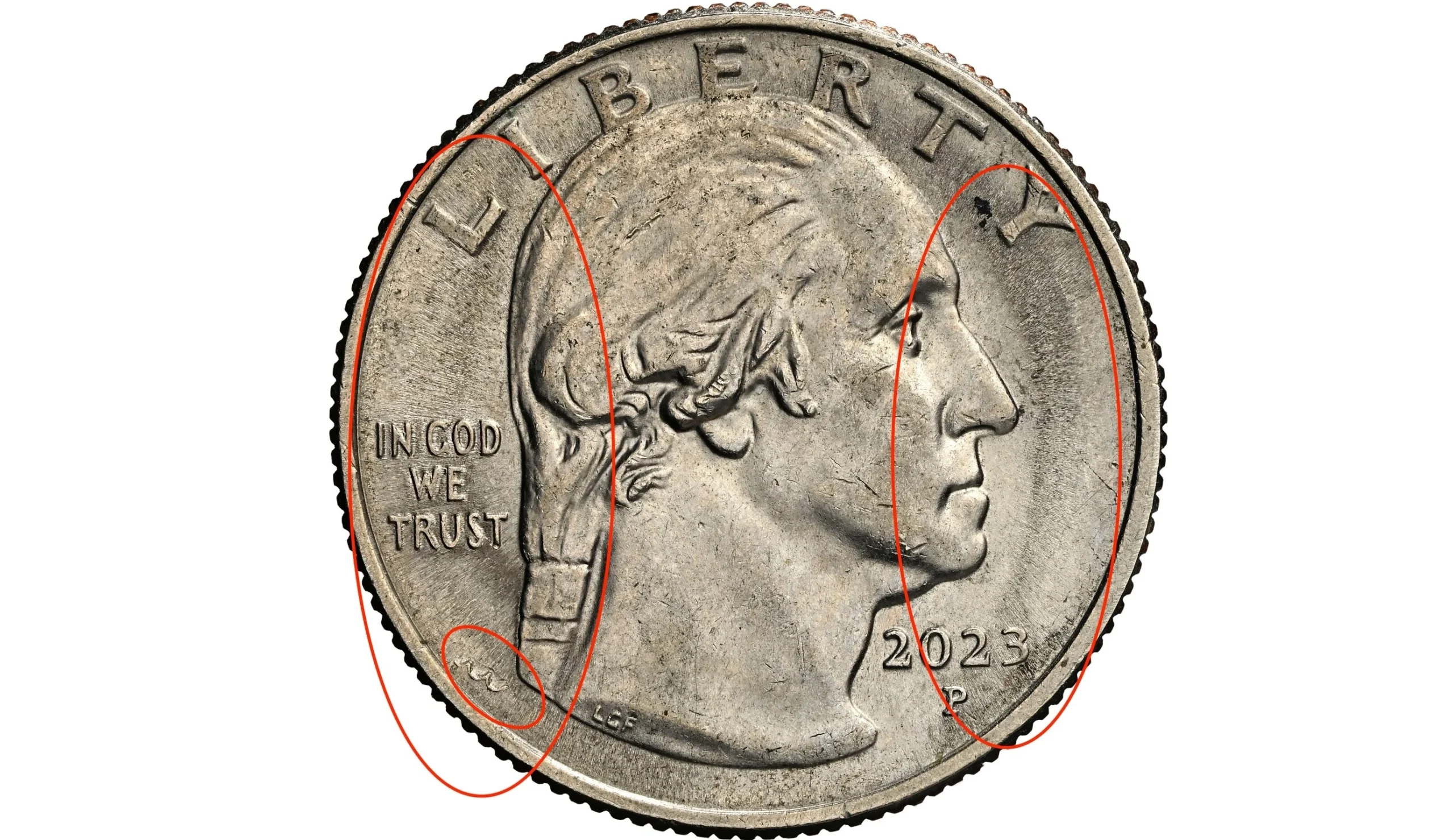
Step 1: Luster Evaluation
A fresh coin from a mint bag has a strong original luster. The loss of this shine on the highest parts shows that the coin spent time in circulation.
Step 2: Detail Wear Verification
Check these specific high points on the Jovita Idar quarter:
- George Washington cheek
- Hair lines above the ear
- Text letters on the dress
- Sharpness of small words
Step 3: Mechanical Damage Identification
Deep scratches, bag marks, and cleaning marks lower the coin grade. Cleaned coins do not receive a numeric grade from professional coin grading services like coin-identifier.com.
Financial Risks and Lost Profit Examples
Bad coin care often destroys the market value of a rare coin.
Coin Cleaning Mistake
A coin collector found a rare off-center quarter and cleaned it using household soap and chemicals. The chemical reaction destroyed the original mint luster completely.
Before the cleaning process, the coin value was about $180. After the cleaning process, grading companies called the coin damaged, lowering the value to $35.
Soft Plastic Storage Mistake
Storing coins in cheap soft plastic holders with polyvinyl chloride causes chemical damage. The plastic chemicals release a green substance, creating a permanent stain on the copper and nickel metal. One collector lost a lot of money on an MS67 coin because of bad storage.
The original coin value was $65. The green chemical stain dropped the real market value to $10.
Price Dynamics of Copper and Nickel Scrap
Metal melt value does not control the collector price of rare error coins, but it sets the absolute lowest coin value. These numbers show the price change for a kilogram of copper and nickel scrap metal over the recent period:
2024 value: $4.15
2025 value: $4.80
2026 value: $5.90
How to Profitably Sell Your Coin Error
Selling rare coins successfully requires a clear plan to get the best price. Follow these steps when you find a coin error:
- Stop all metal cleaning activities
- Put the coin in a hard plastic holder without PVC chemicals
- Take sharp close photos of the error area
- Compare your coin with official error catalogs
- List the coin on trusted auction sites
Practical Tips for Series Collectors
Buying original paper rolls of coins from the Denver or Philadelphia mints can bring excellent finds. The price of a standard forty-coin roll is usually $15 to $25.
Searching through these rolls can help you find perfect MS66 or MS67 coins with very few scratches. Finding an error coin inside an original roll ensures the best possible coin state before you put it in a safe holder.
Paying for professional grading for coins worth less than $20 is a bad financial decision due to high shipping fees.
Send your coins to grading services only if you have a rare error or expect a grade of MS67 or higher. When you sell raw error coins online, always upload clear photos of the error next to a ruler. When you buy coins from online sellers, check their feedback score and avoid bad listings with blurry photos.
Investing in modern quarters requires patience because prices can drop when new coins enter the market.
A rare coin error always keeps a high market value because of low supply. Looking at completed auction sales helps you understand real market prices and sell at the best time. Keeping a clean coin list makes it much easier to sell your collection later.
Writing down your purchase prices helps you track your real investment profits over time.