
New collectors often enter the penny market excited, curious, and eager to build a small collection. That enthusiasm is a strength, but it can also make beginners vulnerable to overpriced coins. Many sellers take advantage of this learning curve by charging far above fair market value for extremely common issues, marking them as rare pennies.
However, you can learn to avoid these traps, see the real coin value, and build your collection wisely from the very start. You’ll need some knowledge and a couple of instruments — we show you which ones.
Why Beginners Overpay and How Overpricing Happens
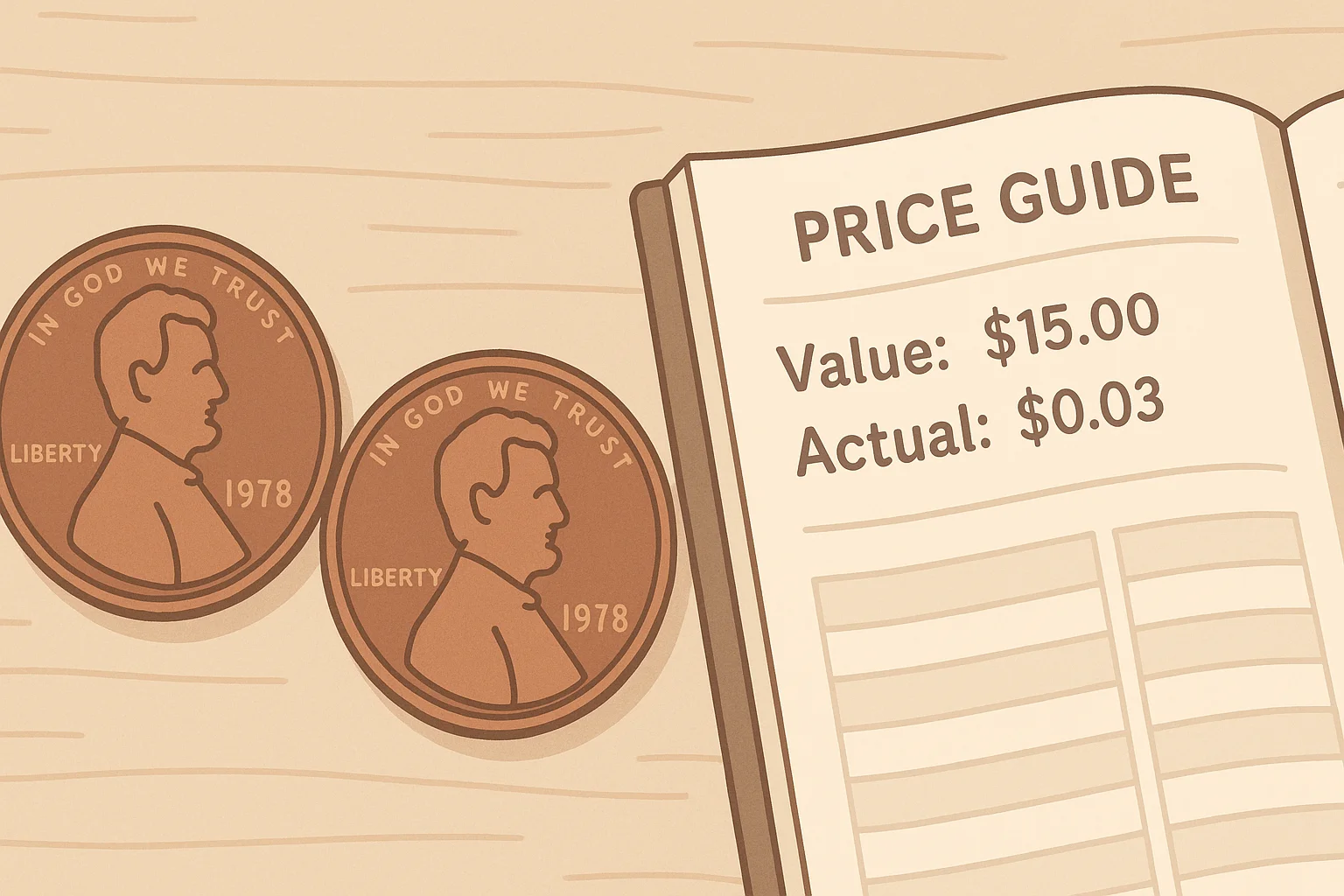
A circulated Lincoln cent worth five to twenty cents may appear online for $5–$15, wrapped in persuasive descriptions like “original,” “toned,” “key date,” or “last one available.” These terms create the illusion of rarity, even when the coin itself exists in the millions.
Overpriced pennies are not rare coins misjudged by accident. They are typically ordinary circulation coins listed with unrealistic markups, often ignoring actual market data. Sellers sometimes rely on vague grading terms, inflated shipping, or lack of transparent comparison points. For someone just starting out, it can be hard to know what a fair price looks like without trusted references.
The first step in avoiding overpricing is understanding the true value structure of modern and older pennies. A beginner does not need advanced numismatic knowledge to stay safe. What they need is a simple process:
- Check actual sold listings, not active listings
- Compare values with standard price guides
- Know which pennies deserve premiums and which never do
- Recognize the wording that signals inflated pricing
- Verify the coin’s details independently instead of relying on seller claims
This approach helps build confidence and prevents expensive mistakes early in the collecting journey.
What Drives Penny Overpricing?
Three common forces shape these inflated listings:
1. High-Mintage Coins Misrepresented as Scarce
Dates like 1960 Philadelphia or most 1970s cents were minted by the hundreds of millions. Circulated examples rarely exceed $0.05–$0.25 in value.
2. Vague or Misleading Grading Terms
Phrases such as “AU details,” “uncleaned,” “almost BU,” or “toned beauty” lack precise meaning and often mask average condition.
3. Shipping Fees That Triple the Cost
A $1 penny with $6 shipping is still a $7 purchase. Sellers use shipping to hide premium pricing.
Red Flags, Value Benchmarks, and Reliable Price-Checking Methods
Identifying an overpriced penny becomes much easier once you know what signals to look for. Experienced numismatists rely on consistent markers: mintage data, certified populations, recent market sales, and transparent grading.
Beginners can use the same indicators (paired with the coin identifier for instant check-up) to avoid inflated listings and understand why certain coins carry higher premiums while others never justify elevated prices.
1. Emotional or Vague Descriptions
Sellers often highlight appeal instead of facts. Phrases like “rare find,” “vintage,” “unsearched,” “estate attic discovery,” or “great investment” usually mask common coins.
2. Overhyped Toning on Modern Dates
Natural toning does not turn a 1975-D penny into a collectible worth $15. Attractive colors can add interest, but color alone rarely increases value for high-mintage coins.
3. “BU” Claims Without Certification
Raw pennies claimed to be “Brilliant Uncirculated” but sold without a slab are often just average AU pieces. Real BU reds for common Memorial cents usually sell for $1–$2, not $10–$20.
4. Shipping Costs Higher Than the Coin’s Value
Charging $4–8 to ship a one-cent coin is a classic overpricing tactic. It inflates the total cost while keeping the listing price deceptively low.
5. Mislabeling Common Coins as Errors
Many listings advertise “errors” where none exist—die deterioration lines, strike weakness, or plating bubbles are not collectible mistakes. True errors are well-documented and never ambiguous.
Value Benchmarks Every Beginner Should Know
These guidelines help identify when a coin’s price exceeds fair market ranges:
| Penny Type | Circulated Value | BU Value | Overpriced At |
| Wheat (1940s) | $0.10–0.50 | $1–3 | >$5 |
| Memorial (1960s) | $0.05–0.25 | $0.50–2 | >$3 |
| Shield (2010+) | Face value | $0.25–1 | >$2 |
Key varieties—such as the 1955 Doubled Die Obverse, 1969-S DDO, or 1992 Close AM—sit outside these rules and warrant higher prices, but these exceptions are well-documented with clear diagnostics.
Step-by-Step Price Checking Method
A beginner can confirm a coin’s true value in minutes using a simple routine.
Step 1 — Check Real Market Sales
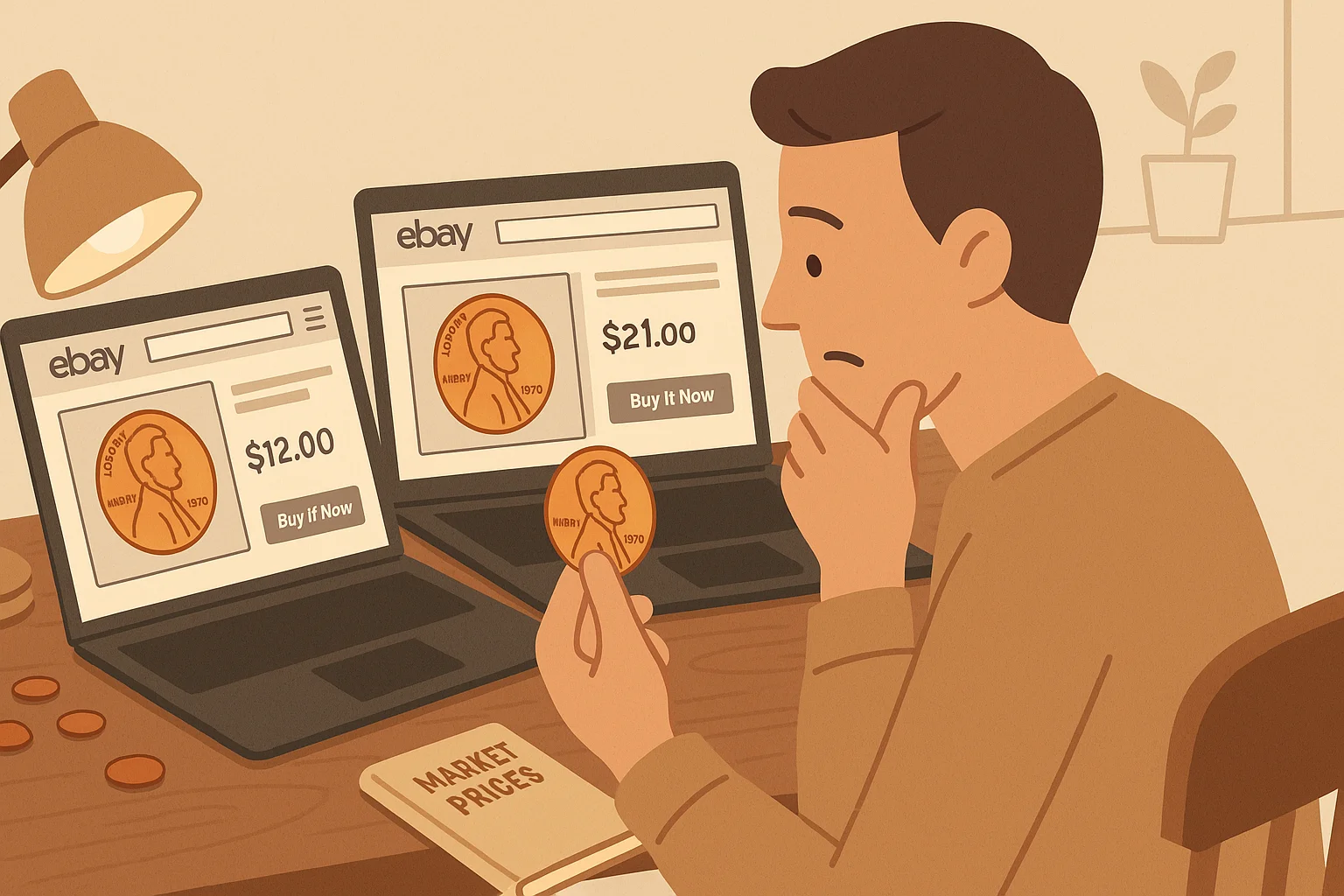
Filter “Sold Items” on eBay, sorting by most recent. Example:
- A typical 1975 penny sells for $0.10–$0.20.
- Listings at $8–$10 are pure markup.
Step 2 — Compare with Price Guides
Consult reliable sources such as:
- PCGS CoinFacts
- NGC Coin Explorer
- Red Book online references
- A trustworthy coin value checker app
These tools show value ranges across grades, helping you judge if the asking price aligns with recognized standards.
Step 3 — Confirm Mintage and Population Data
High-mintage coins almost never warrant high prices.
NGC Census and PCGS population reports demonstrate how many high-grade survivors exist.
Step 4 — Verify the Coin’s Attributes Independently
Never rely on the seller’s description alone. Details like mintmark, strike quality, or doubling should be verified through trusted images or apps—Section 3 covers the most efficient tools.
Verification Tools, Smart Alternatives, and Confident Buying Strategies
Avoiding overpriced pennies becomes much easier once you have a reliable verification routine and understand where the most accurate market signals come from. With consistent habits, beginners can build a strong foundation, prevent costly mistakes, and collect with confidence—often at a fraction of the prices seen on inflated listings.
Using Digital Tools to Verify Pennies Quickly
Modern collectors rely heavily on photo-based identification to cross-check seller claims. This helps beginners confirm dates, mintmarks, varieties, metal composition, and baseline values without guessing.
One of the most efficient tools available is the Coin ID Scanner app. It is regarded as one of the most trustworthy and advanced options for collectors and history enthusiasts of all levels, available on Android and iOS with a freemium model (mostly paid features for full access).
How it helps beginners avoid overpriced listings:
- Coin Identification by Photo: Snap or upload a coin image to instantly generate a detailed coin card showing year, country, type, edge, composition, weight, diameter, and price.
- Extensive Database (+187,000 entries): Ideal for confirming if a “rare” penny actually matches common specs.
- Collection Management: Build a digital archive that tracks what you already own, preventing duplicate purchases.
- Smart Filters (paid): Detects varieties faster by narrowing attributes.
- AI Coin Helper: Offers insights aligned with known diagnostics for modern varieties.
These features remove guesswork and help beginners identify misleading descriptions before making a purchase.
Better Buying Alternatives That Keep Your Budget Safe
Instead of relying on hundreds of questionable online listings, beginners can find fair prices from sources known for transparent value.
1. Bank Rolls and Circulation Hunting
$10 boxes from banks often yield early memorials, 1982 copper cents, and occasionally Wheat pennies—at face value.
2. ANA Shows and Local Dealers
Dealers registered with the American Numismatic Association usually price commons fairly, especially in bulk lots.
3. Online Auctions With Transparent Sales Data
GreatCollections and Heritage Auctions display final sold prices, allowing beginners to understand true market ranges.
4. Community Swaps
Local clubs or Reddit’s r/coincollecting often offer trades or low-cost duplicates from seasoned collectors.
5. Verified Bulk Sellers
APMEX, JM Bullion, and GovMint provide common rolls at modest markups, useful for filling folders efficiently.
Practical Tips for Building Value Without Overspending
These habits help beginners grow collections without falling into pricing traps:
- Track recent sales weekly to stay aligned with current market values.
- Avoid impulse purchases—overpriced coins often rely on quick decisions.
- Study common errors visually using Cherrypickers’ Guide images before buying any “error” coin.
- Set maximum ceilings for common-date purchases (e.g., no more than $1 for BU Memorial cents).
- Favor certified varieties if the premium relies on condition or rarity.
With patience and consistent checks, beginners can avoid overpricing entirely.
Overpriced pennies are a common hurdle, but once beginners recognize red flags, rely on accurate references, and verify coins independently, the hobby becomes far more rewarding. Smart collecting revolves around knowledge, steady habits, and careful comparison—not inflated listings. With the help of trustworthy tools like Coin ID Scanner and reliable buying sources, it becomes easy to stay within budget, build meaningful sets, and enjoy the long-term growth of a collection grounded in real value.